Location
Making the Most of a Flex Space or Bonus Room
March 18, 2020
-
Get Your Free Guide Book
Inspiration, process, and more to get you started on the right foot.
-
Find a Design Studio
Our team of experts is available to design and build your dream home typically within 75 miles of our Design Studios. Find a location near you.
True customization is making your home, your own, your way. Working with Schumacher Homes, we have design experts on staff who help homeowners select specific features to customize their homes, offer a variety of home sizes and layouts and give homeowners the opportunity to customize both the interior and exterior of their home, that includes making sure every space in the home is tailored to fit your needs and lifestyle.
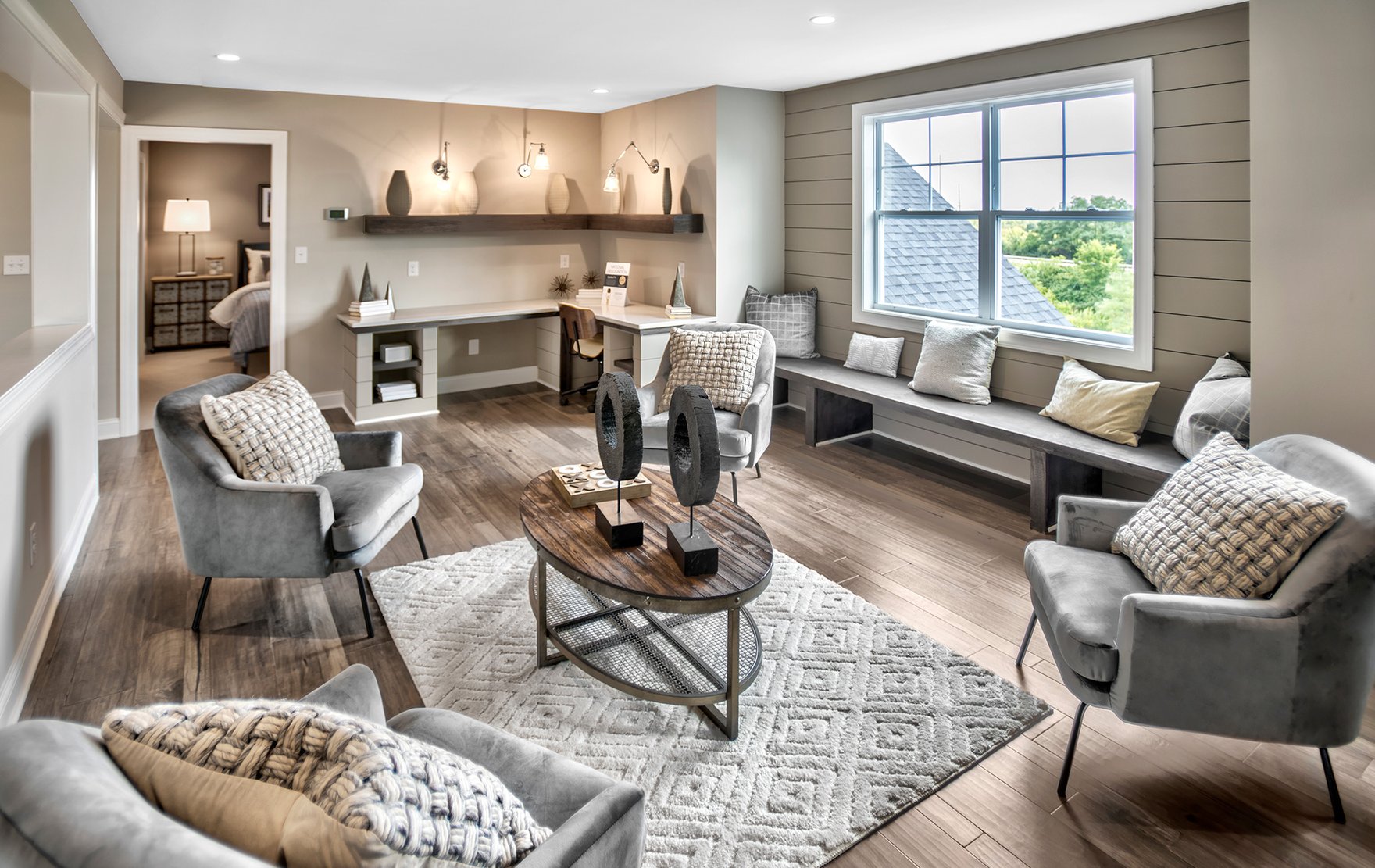
Several of our house plans feature an area in the home called a flex space or bonus room. A flex space is a room in your home that can be customized and used for a number of different functions. They are intended to be flexible and can be utilized in different ways throughout your time and life in the home. Below is a list of six ideas our design team pulled together for utilizing and making the most of your flex room.
Playroom
Create a unique space in your home for kids to play and have a little freedom. Flex rooms can be designed to include built-in storage and shelving for storing toys, books and games. This cozy kid-friendly space can include furniture like small tables, easels for crafts and soft seating for reading time. Choose to add a door or sliding door to hide the clutter and mess if unexpected guests pop over to say hi!

Homework Space
As children grow, playrooms can be easily converted into homework spaces. Rearrange built-in shelves to store homework supplies and books instead of toys. Add computer workstations, desks and beanbag chairs for reading or studying time. Add French doors or a sliding barn door to keep the space separate and quiet from the rest of the house when homework needs to get done.

Library
Any bookworms in the family? Then incorporating a library in your home might be the perfect solution for keeping all of your favorite reading materials in one spot. Built-in floor-to-ceiling bookshelves and cabinets make storing your books and magazines easy. Mix up the shelves with pieces of artwork or arrange your books by color to create a unique display in your home. And don’t forget a few comfy chairs to sit on!

Hobby Room
Create an area in your home that’s just for painting, writing, crafts or whatever hobby interests you or someone in your family! To create more space in your hobby room, custom cabinets are the perfect solution to store supplies and any unwanted messes. An industrial table with stools or tall seating is good to have if you plan to work on long projects or want to mix up the type of furniture in your home. Lastly, be sure to plan for any lighting needs your specific hobby may require.

Game Room
Whether your family is in to board games, video games or card games, create a custom space in your home for all the competitiveness. A flex game room is a great spot for setting up video game consoles, an air hockey table or several board games. Be sure to incorporate storage into the space for storing all the pieces and parts for the games. And comfy loveseats, floor cushions, bean bag chairs and oversized pillows are a must for those long game nights!

Workout Space
Who needs a fancy gym membership when you can create a home gym?! Add a few free weights, a yoga mat and some cardio equipment like a bike or treadmill and the perfect home gym is yours. Incorporate some mirrors on the walls, a Bluetooth speaker for your awesome workout playlist or a wall-mounted tv for some extra motivation. To make the most of the flooring you chose, be sure to add rubber mats under the cardio equipment and weights. Don’t forget a small table for storing cleaning wipes, water bottles, towels and more!

Flex rooms truly define customization. Maybe you start off in your new home using the space as a playroom for the kids. Over time, the room develops into a homework space and eventually evolves into your personal home gym. Whatever you need the space to be now and, in the future, our team of design experts are ready to help you plan and make the most of your flex room!
Have a flex space in your home? Share a picture with us on social media using #SchumacherHomes or send us a photo at socialmedia@schumacherhomes.com and tell us how you use your flex or bonus room!
Have Questions? Let's Talk.
Frequently Asked Questions
When in the planning process should I hire a custom home builder?
Ideally, you should involve a builder before you finalize plans or purchase land. Bringing them in early lets you align design with budget and avoid costly site surprises.
What financial questions should I ask beyond price and contract type?
Ask how and when payments are collected, whether they help coordinate with your lender, and what happens if your appraisal comes in low. Clarify policies for cost overruns.
How is working with a fully custom builder different from a semi-custom or production builder?
Fully custom builders offer more flexibility in floor plans and materials but usually require more decisions. Semi-custom or production builders often limit choices, which can simplify decisions but restrict personalization.
What are warning signs that I should avoid a particular custom home builder?
Be wary of builders who resist putting details in writing or pressure you to sign quickly. Frequent staff turnover, poor responsiveness, or inconsistent online reviews can also signal future problems.
How should I prepare before my first meeting with a custom home builder?
Come with a realistic budget range, a list of must-haves, and any example floor plans you like. If you already own land, bring any surveys or documents you have.
What should I ask about building in an HOA or master-planned community?
Ask if the builder has worked with that HOA before and how they handle architectural review approvals. Confirm how HOA rules might affect your design and exterior materials.
How can I evaluate a builder’s approach to healthy, sustainable materials?
Ask which low-VOC paints and flooring they use by default and what eco-friendly options are available. Request examples of past projects where they incorporated energy-efficient systems and durable materials.