Location
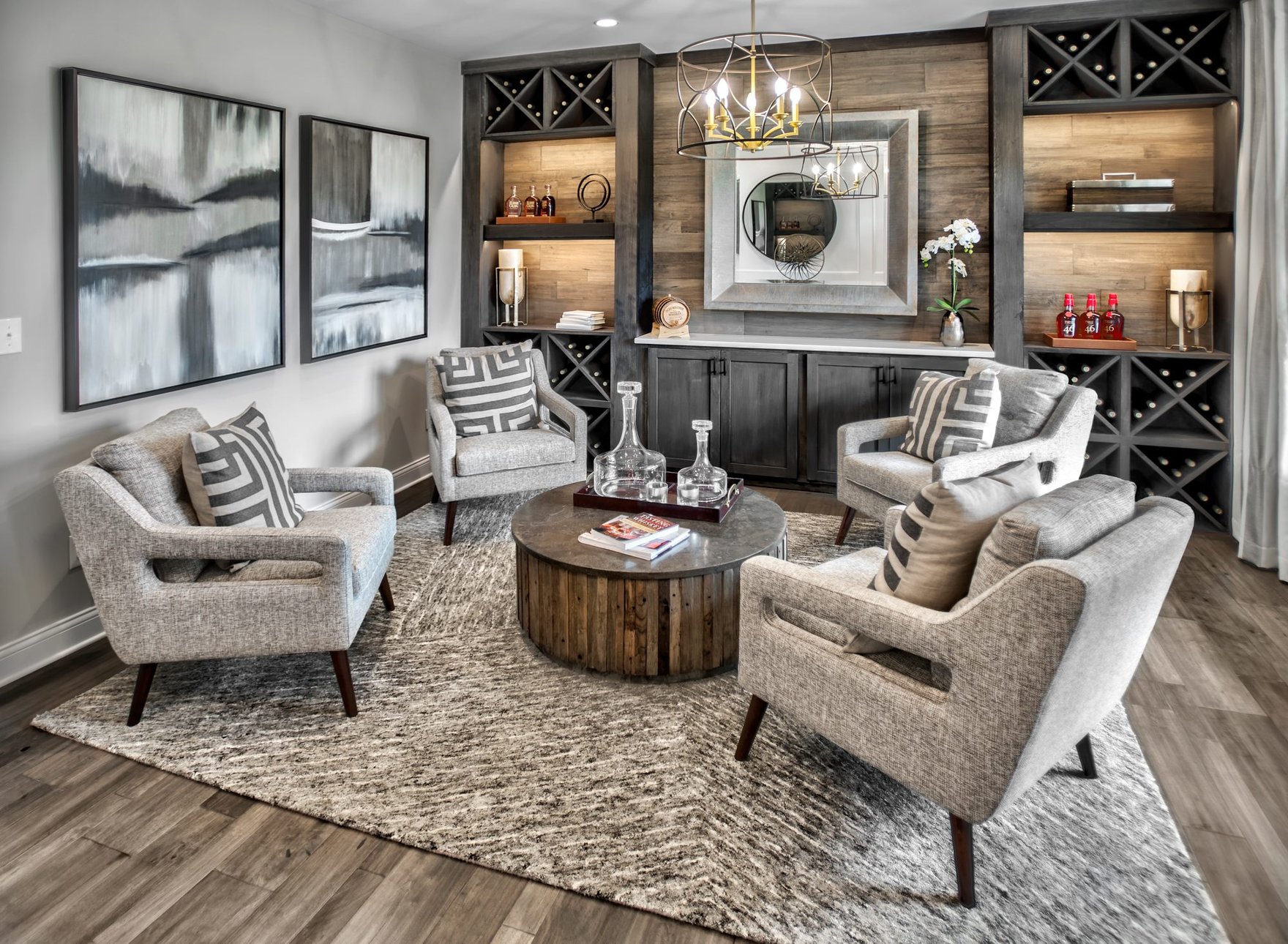
Elevate Your Home Entertaining by Adding a Bar to Your Custom Home
January 25, 2021
-
Get Your Free Guide Book
Inspiration, process, and more to get you started on the right foot.
-
Find a Design Studio
Our team of experts is available to design and build your dream home typically within 75 miles of our Design Studios. Find a location near you.
In previous posts we’ve discussed the ways different spaces in your home can evolve over time or be repurposed through design customization whether influenced by modern trends, a big life change, or when you just need to hit refresh.
In this blog we take the same lens examining home bars. Once considered a focal point for entertainment purposes only, after several decades of diminished popularity today’s home bar makes a comeback as both a convenient gathering place for families and a great place to host guests.
From Formal Attire to DIY
A home bar can be more than a place where drinks are served. And there’s more to know than simply wet or dry. To get you up to date and more familiar with all the present day home bar trends, let’s take a brief look at its past.
Following World War II, having a bar in your home was a way to showcase your piece of the American dream. And the events hosted there probably looked more like a formal affair than a party among friends. Over the decades, home bars became less popular for regular weekly engagements.
However, like so many other in-home trends recaptured or proven timeless by the fervent wave of home improvement and customization of the last twenty years the home bar has been reinvented as a fun and welcoming location to host, relax, and refresh.
Wet vs. Dry
A wet bar serves alcohol. A dry bar does not. Right? Unlike some of the less literal items in your home today (see Butler’s pantry or a Hoosier’s Cabinet), simply put: a wet bar has a sink, a dry bar does not. Both provide convenience and alternative storage for all kinds of refreshments beyond cocktails, wine, and beer. If a sink is a must have in your home bar, the extra legwork of proper plumbing installation will earn you a more self-contained refreshment destination with the added bonus of running water.
Upstairs. Downstairs. Inside. Out.
Consider all the options and get creative with these helpful hints and suggestions when determining which location in your home is right for you.
Indoor Bars offer year-round, weather-proof enjoyment and an element of convenience. We recommend adding an area near the heart of your home like a kitchen or great room to help maintain easy access for guests without having to go back and forward through other rooms. Make the most use of a smaller space by adding a mirror to give a grander sense of scale.

If you’re looking for a distinctive effect, but still want to stay within the natural flow of your home, consider creating a home bar in a separate room as its own dedicated space. You can also utilize an existing flex room space as a separate seating area.

Example of a Custom Home with a dedicated Wine Room.

The Olivia Modern Hill Country Home presenting flex room space as a separate seating area.
Not to be overlooked and often the first place you might think of when considering a home bar location, is the basement. Basement bars are an obvious place to host event nights within the comfort of your own home. The Big Game, a watch party, poker night? Basement bars provide the space and flexibility for enhanced, in-home entertainment value like a flat screen TV, lounge chairs, and billiard tables.

The indoor splendor and flexibility of a custom home’s basement bar.
Get away while not going far away with a fun and original outdoor bar that goes beyond tiki torches and wicker furniture (but we like those too). In our blog we’ve previously discussed the benefits and value of building an outdoor kitchen – an outdoor bar can be another great compliment to any existing outdoor space!
Outdoor bars can enhance your backyard oasis while offering a practical solution to your guest’s foot traffic with less trips inside. Make the most of your current patio by clustering furniture around your bar, opening up ample room for a dining area with a separate table.
Atmosphere & Convenience
No home bar will be complete without the right lighting and complementing products.
Warm and dramatic pendent lighting coupled with open or floating shelves will showcase the contents of your glassware and further deliver that bold bar feeling you’re going for.

Inviting lighting. The Chronicle Collection One-Light Mini-Pendant from Progress Lighting
A mini-fridge is a double-win. Providing your home bar with the ability to store cold items while offering additional storage solutions to your kitchen’s main fridge.
Family Friendly
A home bar can be an indispensable addition to any modern home. And as much as they’ve changed in design and scale over the decades, their purpose today offers an increased functionality to families or when hosting others. Bars can stand in as self-serve stations with single-serve coffee makers and refrigerators stocked with all types of kid friendly beverages. Like so many other valuable and innovative ways you can make your home more custom to your needs, a home bar might just be one that you say, how did we ever live without it?
Have Questions? Let's Talk.
Frequently Asked Questions
When in the planning process should I hire a custom home builder?
Ideally, you should involve a builder before you finalize plans or purchase land. Bringing them in early lets you align design with budget and avoid costly site surprises.
What financial questions should I ask beyond price and contract type?
Ask how and when payments are collected, whether they help coordinate with your lender, and what happens if your appraisal comes in low. Clarify policies for cost overruns.
How is working with a fully custom builder different from a semi-custom or production builder?
Fully custom builders offer more flexibility in floor plans and materials but usually require more decisions. Semi-custom or production builders often limit choices, which can simplify decisions but restrict personalization.
What are warning signs that I should avoid a particular custom home builder?
Be wary of builders who resist putting details in writing or pressure you to sign quickly. Frequent staff turnover, poor responsiveness, or inconsistent online reviews can also signal future problems.
How should I prepare before my first meeting with a custom home builder?
Come with a realistic budget range, a list of must-haves, and any example floor plans you like. If you already own land, bring any surveys or documents you have.
What should I ask about building in an HOA or master-planned community?
Ask if the builder has worked with that HOA before and how they handle architectural review approvals. Confirm how HOA rules might affect your design and exterior materials.
How can I evaluate a builder’s approach to healthy, sustainable materials?
Ask which low-VOC paints and flooring they use by default and what eco-friendly options are available. Request examples of past projects where they incorporated energy-efficient systems and durable materials.